Garden room built without permission? Retention and your options
The short answer
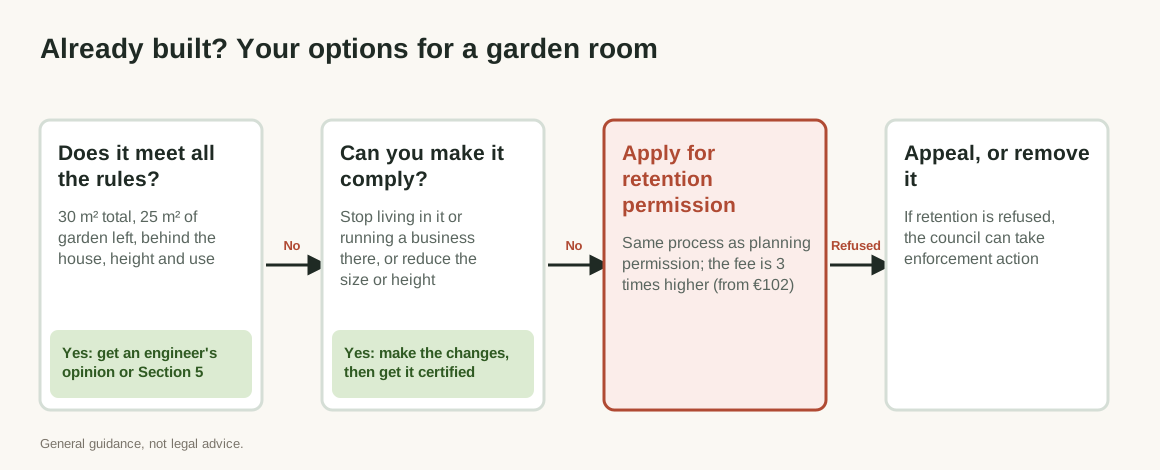
If your garden room meets the exemption rules, you don't need retention: get an engineer's opinion on exemption or a Section 5 declaration to prove it. If it doesn't, you can change it so it complies, or apply for retention permission, which follows the normal planning process but costs €102 or €2.50 per m², whichever is more. Waiting it out doesn't make it legal.
On this page
First, check if it is exempt
Plenty of garden rooms built without an application are perfectly legal. A garden room is exempt if it meets all of these:
- 30 m² or less, counting every shed, garage and garden room at the house together. The limit was 25 m² before 27 July 2026, so a room built earlier had to meet the old limit at the time.
- At least 25 m² of garden left behind or beside the house.
- Behind the front wall of the house.
- Within the height limits: 3 m, or 4 m with a tiled or slated pitched roof.
- Not lived in, slept in or used for a business.
- Your house's own planning permission doesn't remove exemptions, and the house isn't a protected structure.
If it passes, get it confirmed in writing. An architect or engineer can give an opinion on exemption, which is what a buyer's solicitor will ask for. If you want the council's own ruling, apply for a Section 5 declaration (€80).
Making it comply
Often the cheapest fix is to bring the room within the rules:
- Change the use. If someone is living or sleeping in it, or you run a business with visiting clients, stopping that use may be all it takes.
- Remove another structure. Taking down an old shed can bring the total back under 30 m².
- Reduce the height or change the roof, though that's rarely practical.
Once it complies, get an engineer's opinion so you have it on paper.
Applying for retention
Retention permission is planning permission for something already built. The process is the same as a normal application: drawings, a newspaper notice, a site notice, 5 weeks for submissions, a decision within 8 weeks and a 4-week appeal period. See applying for planning permission for each step.
The council assesses it as if the room weren't there yet. It will look at size, the effect on neighbours, how much garden is left and the use. If granted, expect conditions, often that the room is only used for purposes connected with the house.
Retention fees
| What you're retaining | Council fee |
|---|---|
| Garden room or shed of 30 m² | €102 |
| Garden room of 50 m² | €125 |
| A separate home in the garden | €195 or €2.50 per m², whichever is more |
| Appeal against a refusal | €660 |
Retention fees are three times the normal fee, or €2.50 per m², whichever is more. A first-party appeal that includes retention costs €660, three times the normal appeal fee.
The seven-year rule
Councils generally can't start enforcement action against unauthorised works more than about seven years after they were carried out. People often take this to mean the building becomes legal. It doesn't:
- It is still unauthorised. The time limit stops enforcement; it doesn't grant permission.
- It affects a sale. Buyers' solicitors and lenders may raise it, and some buyers will walk away. See selling a house with a garden room.
- It limits future works. Exemptions don't apply to extending or altering an unauthorised structure.
- Use is separate. Starting to live in an old garden room is a new change of use, with its own time limit.
If the council gets in touch
Enforcement usually starts with a warning letter, often after a neighbour complains. You get a chance to respond, usually within 4 weeks. Reply in writing: explain why you think it's exempt, or tell the council you're applying for retention or making changes. Ignoring it can lead to an enforcement notice and, eventually, court.
Common questions
Do I need retention permission for my garden room?
Only if it isn't exempt and you want to keep it as it is. Many garden rooms built without an application are exempt: up to 30 m² in total with other sheds, at least 25 m² of garden left, behind the house, within the height limits and not lived in or used for a business. If it meets those rules, you need written confirmation, not retention.
How much does retention permission cost for a garden room?
The council fee for retaining a garden building at a house is €102 or €2.50 per m², whichever is more, which is €102 for anything up to about 40 m². You also need drawings and a newspaper and site notice, as for any application.
Does a garden room become legal after seven years?
No. After about seven years the council generally can no longer take enforcement action against unauthorised works, but the room is still unauthorised. That can cause problems when you sell, and it can stop later works from being exempt.
Can retention be refused?
Yes. Retention is assessed like any planning application, as if the building weren't there yet. If it is refused, you can appeal to An Coimisiún Pleanála within 4 weeks; if the refusal stands, you may have to alter or remove the room.
Sources
Garden room companies serving Dublin
See all Dublin companiesFeatured
Paid placements. Featured companies pay to appear here.
Reach people planning a garden room in Ireland. Featured spots appear at the end of every guide on this site.
Get featuredCompanies serving Dublin
Listed alphabetically, not ranked. How we list companies